Key Takeaways from our CSW70 Event
With an estimated 840 million women and girls having experienced partner or sexual violence, and an unprecedented level of women and girls subject to technology-based violence, access to justice for survivors is a critical pillar in addressing violence against all women and girls.
“Behind each statistic is a survivor seeking recognition, protection, and justice,” said Dr Farida Bena, Every Woman’s Director of Diplomacy, at our high-level event during the 70th session of the Commission on the Status of Women (CSW70). The event explored how international law can strengthen access to justice for survivors of gender-based violence, the theme of CSW70.
Access to justice is a multi-level responsibility
Ensuring survivors have access to justice is the responsibility of both states and international law, Dr Bena noted. Survivors face multiple barriers to justice, including a lack of investigations, weak prosecutions, and limited survivor-centred services. Stronger implementation of commitments at the national level is essential. At the same time, closing gaps in international law would go a long way in setting strong international standards and pushing governments to strengthen their legal systems.
Justice systems must be survivor-centred
A number of panellists shared survivor experiences from their countries. All reinforced the need for holistic and coordinated approaches across multiple sectors — judicial, healthcare, social services, legal aid — to ensure that survivors can safely and easily navigate justice systems and access the support they need.
Ms Clarisse Falanga Mawi, of the Democratic Republic of the Congo and a senior researcher at the University of Kinshasa, spoke on how conflict-related instability and poverty compound existing barriers to justice. Gender-based violence occurs on a massive scale, she said, and emphasised the importance of holistic responses. DRC is working to include reparations for survivors and institutional reform, establishing an integrated centre of multi-sectoral services.
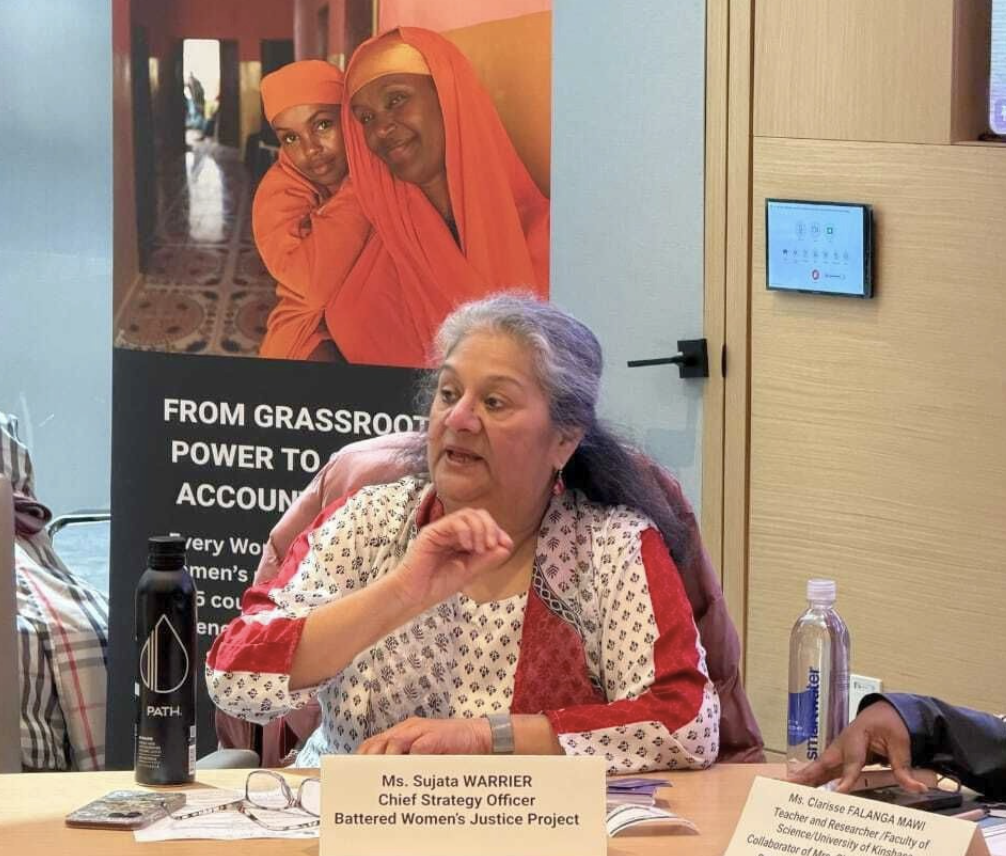
Dr Sujata Warrier, Chief Strategy Officer for the Battered Women’s Justice Project, offered important insights into the need for national justice systems to be designed with survivors. The Violence Against Women Act of 1994 in the US was effective, she noted, in part because attorneys, advocates, and survivors worked together.
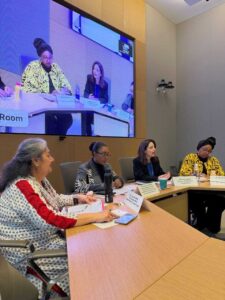
A factor all countries face today is gender bias, she added. Gender bias drastically undermines justice, with lawyers and judges expecting linear narratives from survivors, which is often unrealistic. Additionally, legal personnel do not receive enough training to have a deep understanding of the nature of abuse and therefore think it is only physical violence. Without training to understand issues such as coercive controls, justice is limited or denied.
India’s speciality courts for trafficking offer a strong solution, Warrier noted. “Everybody who’s in that court system is trained,” she said, the judges, medical staff, all involved, a factor that goes a long way in supporting survivors’ health and securing justice.
Dr Eleanor Nwadinobi, President of the Medical Women’s International Association and an Every Woman Cofounder, further grounded the discussion in survivors’ lived realities. She shared the story of widows subjected to harmful practices in Nigeria and said it took years for this violence first to be named and acknowledged, and second, for her and other advocates to get a law passed. Access to justice, therefore, begins with a willingness to name and recognise the problem.
Advancing international accountability is central to survivor justice
The second panel focused on the opportunity that the Crimes Against Humanity Treaty presents to advance justice. Panellists’ varying perspectives demonstrate the complexity of the issue and the challenges women’s rights groups face in securing justice for all women and girls.
Ms Metra Mehran, Policy Advisor with the End Gender Apartheid Coalition, called the current negotiations a “golden opportunity” to codify gender apartheid in international law, citing the situation in Afghanistan and other countries. “What is happening there should shake the consciousness of humanity,” she said. She reported that the UN Secretary-General has recommended codification of gender apartheid in his CSW report and called for global feminist solidarity to resist the broader regression against women’s rights being observed worldwide.
Ms Wendy Isaac, Senior Legal Fellow at MADRE, argued that the term “gender apartheid” requires careful scrutiny. As a Black South African woman who lived under apartheid, she underscored that no one has ever been held criminally accountable for the crime of apartheid, racial or otherwise, under the existing 1973 Apartheid Convention. She called for deeper engagement with women living under these conditions before adopting new codifications, noting a troubling pattern: states that never ratified the Apartheid Convention are now championing gender apartheid, while the voices of Global South women remain insufficiently centred. MADRE’s approach integrates race, gender, and settler-colonial analysis, advocating for an expanded definition of apartheid that includes gender that leaves no one behind.
And finally, Judge Najla Ayubi, a former Afghan Judge and Lawyer and a member of the Every Woman Coalition, addressed the gap between human rights frameworks and criminal accountability, noting that while instruments such as the Convention on the Elimination of All Forms of Discrimination against Women (CEDAW) address discrimination, they do not provide mechanisms to prosecute systemic oppression and persecution of women and girls. A Crimes Against Humanity framework would establish individual criminal responsibility, enable international prosecution, and put in place mandatory enforcement mechanisms, such as International Criminal Court (ICC) arrest warrants and trials. She stressed the importance of universalising the concept so it applies to any context of institutionalised gender domination, not only in places like Afghanistan or Iran, to preserve legal universality and maximise state adoption. Enforceable legal standards are essential to closing accountability gaps, she said.
Access to justice requires:
- Ensuring that survivors’ voices remain central to all legal and policy responses
- Full funding for stronger implementation at the national level, including training in the law and on issues such as domestic violence and sexual harassment
- Institutional reform to ensure survivor-centred justice systems
- Advancement of binding international legal frameworks that specifically address forms of violence against all women and girls
- Greater cooperation between States, UN bodies, and civil society
- Standing together in solidarity against the global gender backlash
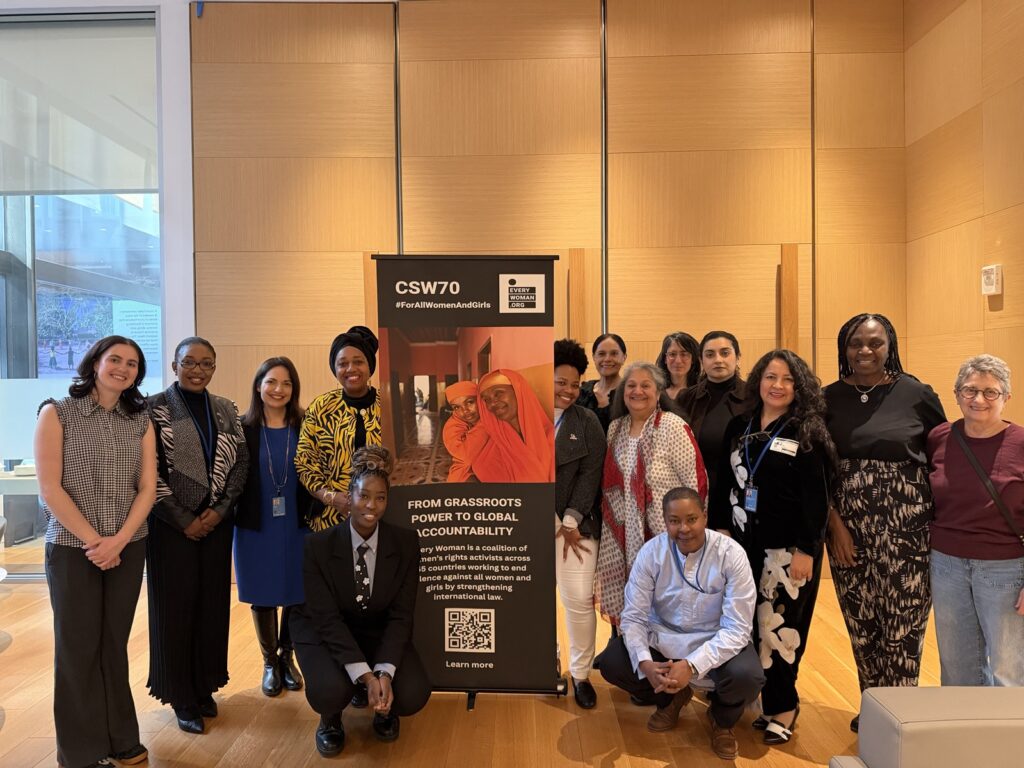
A special thank you to our speakers for sharing their insights, experiences, and expertise.
Watch the full session