Photo courtesy of G.A.H
In July, Every Woman submitted a report on Syria to the Universal Periodic Review (UPR). The UPR is the multilateral mechanism that allows governments to monitor each other’s human rights performance.
Ahead of its review in January 2027. Prepared by coalition members, it calls on the government to publicly acknowledge and independently investigate the documented pattern of abductions targeting Alawite women and girls, to ensure gender parity on the bodies drafting the permanent constitution, electoral law and transitional-justice mechanisms, and to give Syrian women equal rights to confer citizenship on their children.
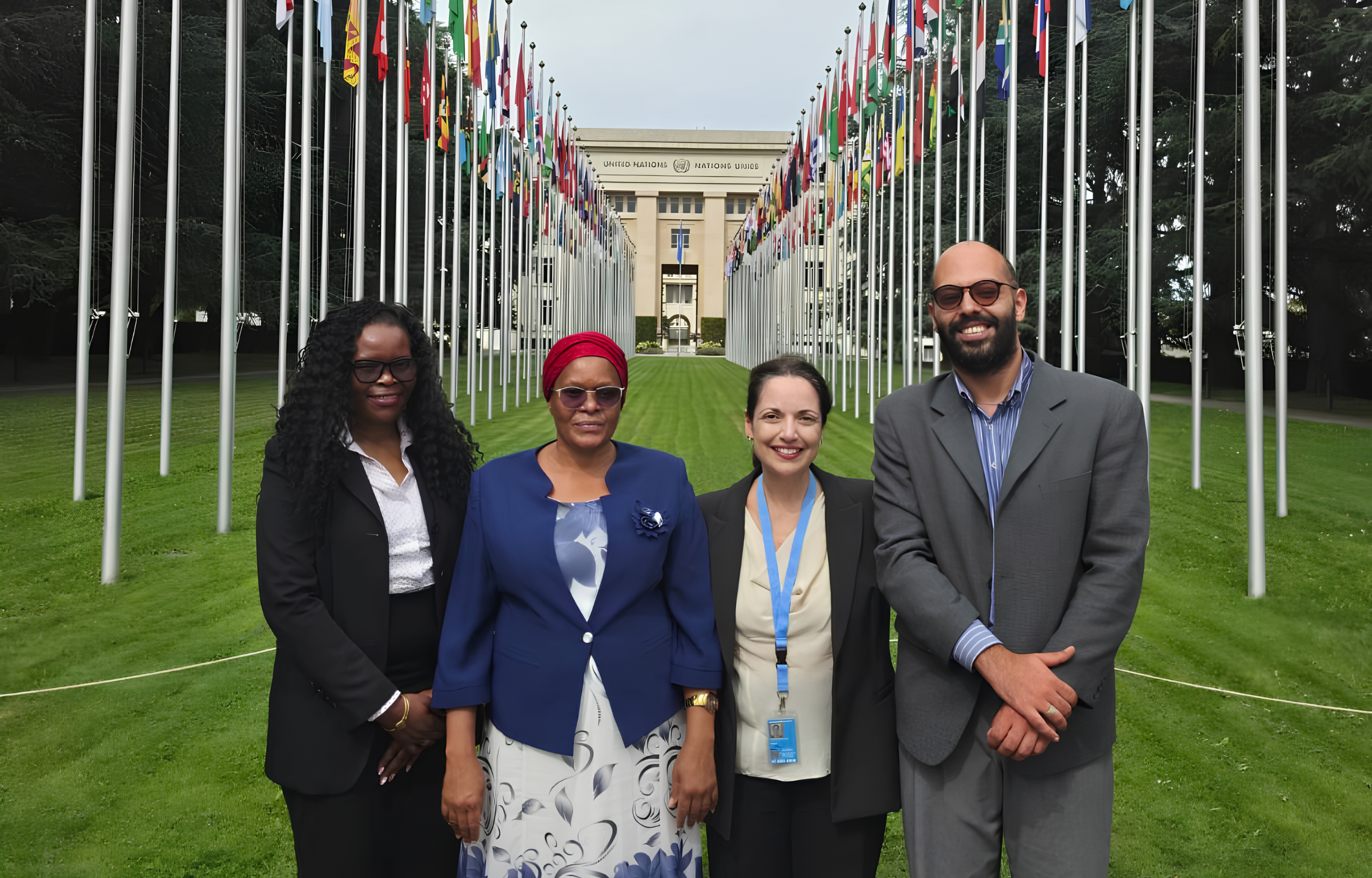
G.A.H., a Syrian coalition member who worked on the submission, attended as an observer alongside Dr Farida Bena, our Director of Diplomacy. Below, G.A.H. shares what she saw, what it told her about Syria’s global diplomacy and what comes next.
1. Why does it matter for civil society/advocates to be in Geneva, even as observers?
Hearing civil society organisations and activists from many countries set out the challenges in their own countries, and talking directly with delegates from Permanent Missions, gave me insight I could not have gained from reading about the UPR. I attended the UPR54 Pre-sessions in Geneva as an observer, alongside Dr Farida Bena, Every Woman’s Director of Diplomacy. I was not a panellist, but being there and engaged was extremely important.
The diversity of CSOs attending gives you a holistic picture of how various issues – such as GBV, food security, minority rights, and freedom of expression – overlap and influence one another. It is also an invaluable opportunity to connect with other civil society organisations and to speak directly with delegates from Permanent Missions of countries that hold power and leverage.
The diversity of organisations in the room gave me a fuller picture of how issues such as gender-based violence, food security, minority rights, and freedom of expression overlap and influence one another. It was inspiring to see people working tirelessly towards one aim: improving the situation in their countries.
2. What did you see that you could not have understood from reading about the UPR process?
One aspect that came to my attention only by attending in person is that every country’s approach to drafting the UPR recommendations is different; thus, there is nothing better than talking directly to the Permanent Missions and asking questions, so that your advocacy approach can be tailored to what makes sense within the internal functioning of the country in question. Throughout the pre-session week, several events are happening around civil society recommendations to the UPR process, so it is beneficial to try to attend them all to maximise and diversify understanding and engagement.
3. How did what you saw connect to the recommendations you wrote for Syria?
Most of the points we raised in our submission were addressed by the panellists throughout the Syria session, although we differed on the timelines suggested and on how in-depth we went for each recommendation. For instance, one CSO focused only on mothers’ right to pass down their nationality, while we also connected this to personal status laws, making explicit the need for deeper legal reform regarding guardianship. Another CSO brought up the abduction of Alawite women, but connected it to wider minority attacks against other components of Syrian society, thus focusing more on the sectarian aspect of the occurring crimes, and less on the women-specific violence. As for our recommendation on women’s political participation, it was raised by a CSO in a way almost identical to ours, which was very encouraging to hear.
That consensus, and the way the issues were presented to complement each other, sent a clear and comprehensive message to the Permanent Missions in the room. It also opened opportunities for cooperation.
4. What did you notice about how concerns from other countries and civil society groups were raised?
And what, if anything, would you do differently when preparing a future submission?
Regarding the written submission itself, I would change very little for future submissions, except perhaps highlighting occurrences of GBV against other minorities in Syria, and not only against Alawite women simply because they are the most documented as of today. This would further underline the importance of this specific recommendation and connect it more clearly to wider issues and to the work of other CSOs that could become potential partners in the future, for a more powerful joint submission.
I noticed that it is very important to create a clear and captivating presentation. The leaflets at the door should summarise the main points of the submission concisely, without omitting important information, such as suggested timeframes or numbers. It always helps to have a pop of colour and some visual data, which I would make sure to include in the future. Throughout the presentation, the PowerPoint is essential for conveying a complete picture of your information – and those who do it best understand the “sweet spot” of short, readable slides without going through them too fast.
5. What would you tell other coalition members who are preparing, or thinking about preparing, a UPR submission?
Trust your instinct on what matters most and how to communicate it. Ask for guidance and consult experts when you can, and pay attention to how recommendations are phrased so they are clear and actionable. Think about which other organisations could add to your recommendations and reach out early. Go into depth on every recommendation rather than leaving information out for the sake of brevity. And plan ahead for attending the sessions in person, which is valuable both professionally and personally
6. What happens next for the Syria recommendations, and what will you be watching for before the January review?
I hope to reach out to interested embassies, in partnership with organisations whose recommendations align with ours, to offer joint, clear input on violence against women and girls ahead of the January review. This is the time to nurture the connections made, and I will be watching for every opportunity for further engagement and advocacy. With Syria’s new authorities facing their first UPR review and seeking international credibility, we have to work together to achieve the greatest possible impact.