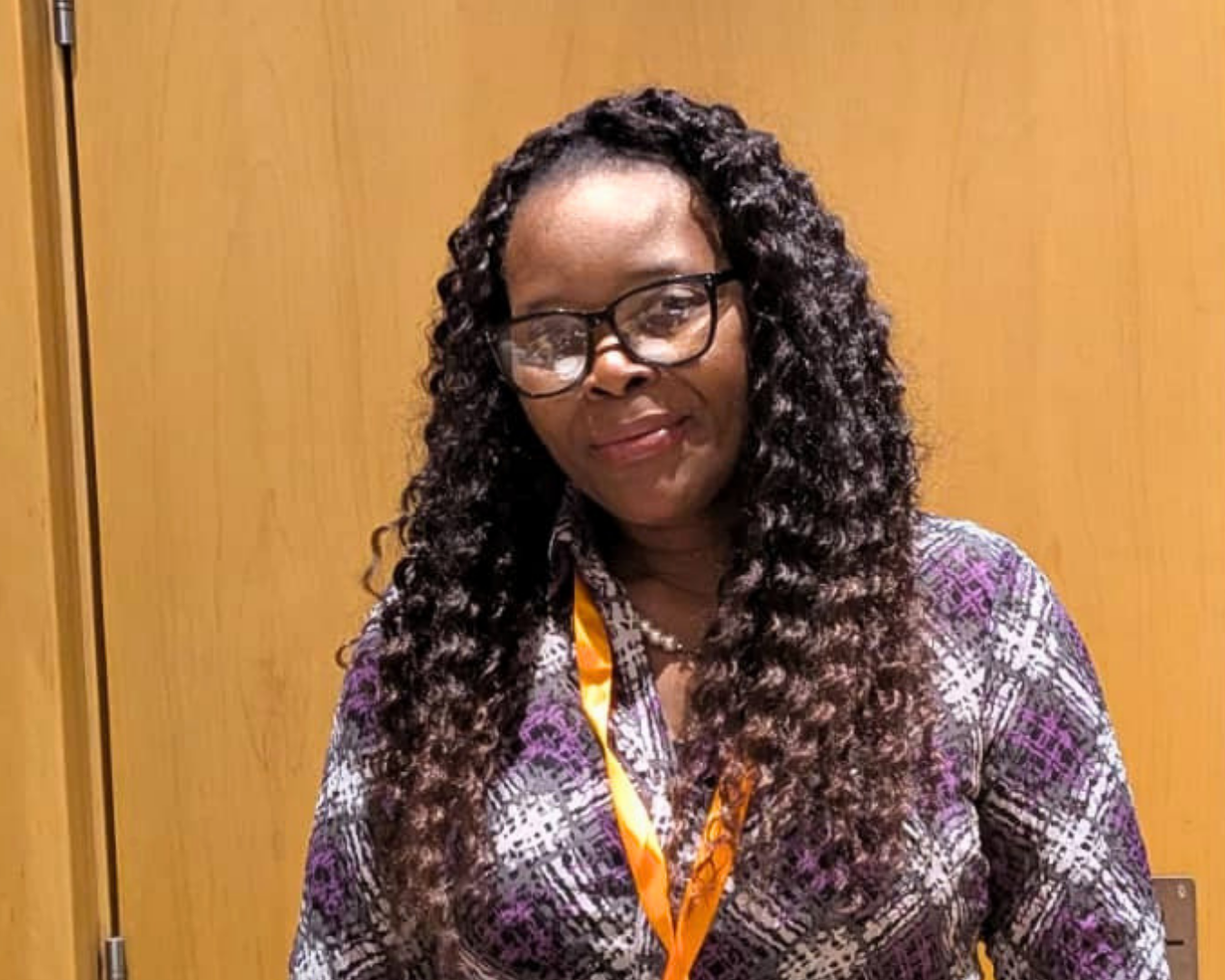
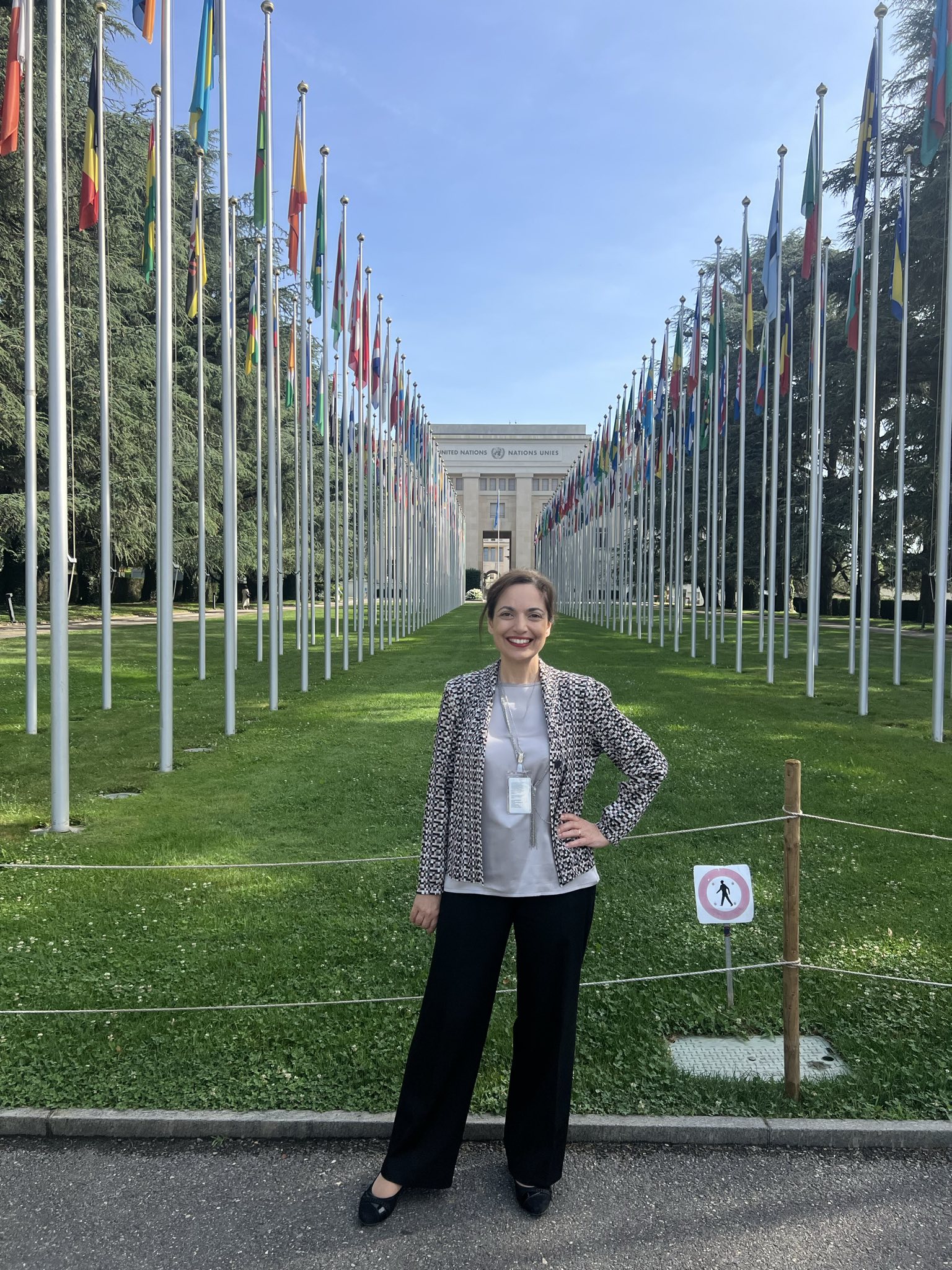
Meet Farida Bena, our powerhouse Director of Diplomacy, who has deep expertise in human rights, humanitarian aid, migration, and development, with work that spans the globe, from Geneva to Sub-Saharan Africa to South Asia. She has worked with the OECD, Oxfam, and the International Rescue Committee, and has also consulted with the European Commission, UNICEF, Save the Children, and several NGO coalitions in Europe, Sub-Saharan Africa, the Gulf States, and South Asia. Farida is a skilled diplomat and policy thinker, as well as a passionate believer in listening to the voices of those affected by policy. With advanced degrees from Yale, Reading, and Milan, Farida leads our diplomatic efforts with rigor, compassion, and a truly global perspective. She is based in Geneva and originally from Italy.
1. What inspired you to join Every Woman?
Over the years, I realised just how pervasive violence against women and girls is around the world. It truly is a global issue that affects half of humanity, day in, day out. When I learned about what Every Woman has been doing to help solve this problem, I felt inspired to give my contribution. It felt right to concentrate on one big issue at this point in my professional and personal journey, and to give it my all.
2. What does ending violence against women and girls mean to you personally?
Being the mother of two teenage daughters, I am very sensitive to all forms of violence against women and girls, particularly the new forms of violence we find on social media and AI-enhanced tools. I try hard to sensitise my daughters about the risks of exposure to violent online content, especially content that comes under insidious disguise, such as video games or influencers with dubious reputation. As a parent trying to find the right balance between letting her children discover the world and protecting them from harm, it often feels like an uphill battle. We are the first generation of parents confronted with this type of technological challenge. That means we don’t have any references or role models. We need to find new ways to ensure technology is safe. I want my girls to be fully aware of their rights and learn to defend them, both in the real and virtual world.
3. In what ways can the world/global community accelerate action to end violence against women and girls?
We can act on multiple levels simultaneously. At a global level, we can strengthen laws and standards that protect women and girls from violence, as Every Woman has been advocating for years. History shows that binding legislation at the global level has a positive effect at the country level, as governments adjust their domestic laws to align with higher global standards. Of course, the proof is in the pudding. Stronger laws on violence against women and girls are more effective if they are enforced. This step requires training judges, the police, social workers and others to apply new laws systematically and ensure accountability for any violations.
Beyond legal interventions, we can accelerate action to end violence against women and girls by introducing dedicated content in school curricula, and by sensitising community leaders, politicians and opinion-makers, both men and women. Ultimately, I believe the best way to accelerate progress is to lead by example – and that starts at home. Parents are the ultimate role models for our future generations. Both mothers and fathers can play an invaluable role by instilling respect for every woman and girl, everywhere.
4. Tell us one thing—serious, funny, unusual, joyful—that we won’t find on your resume.
When people learn that I come from Rome, Italy, they automatically think I am a master at cooking. In reality, I can only cook basic pasta with a bit of tomato sauce. I dream of surprising my family and friends one day with a five-star meal, like the little mouse in Ratatouille. I just need to find the inspiration (and a very patient teacher!).
5. Finally, what gives you hope for the future of women’s rights?
Despite the current backlash against women’s rights, we have a lot to be thankful for. There is a higher level of awareness of women’s rights in schools, in the workplace and at the community level in a growing number of countries, perhaps exactly because these rights are under threat now globally and call for more decisive action. Countries where violence against women and girls has been particularly rampant for years, such as the Democratic Republic of Congo, have made it a priority to end this violence at the highest political level. In diplomatic circles, as in local communities, there is widespread recognition that we need to intervene urgently to address this issue. I am also encouraged by the increasing number of men and boys who choose to promote positive masculinity roles. Their engagement shows that ending violence against women and girls is everybody’s business, not just a woman’s problem, and that when women and girls are safe, society benefits as a whole.
Please find her full bio here.