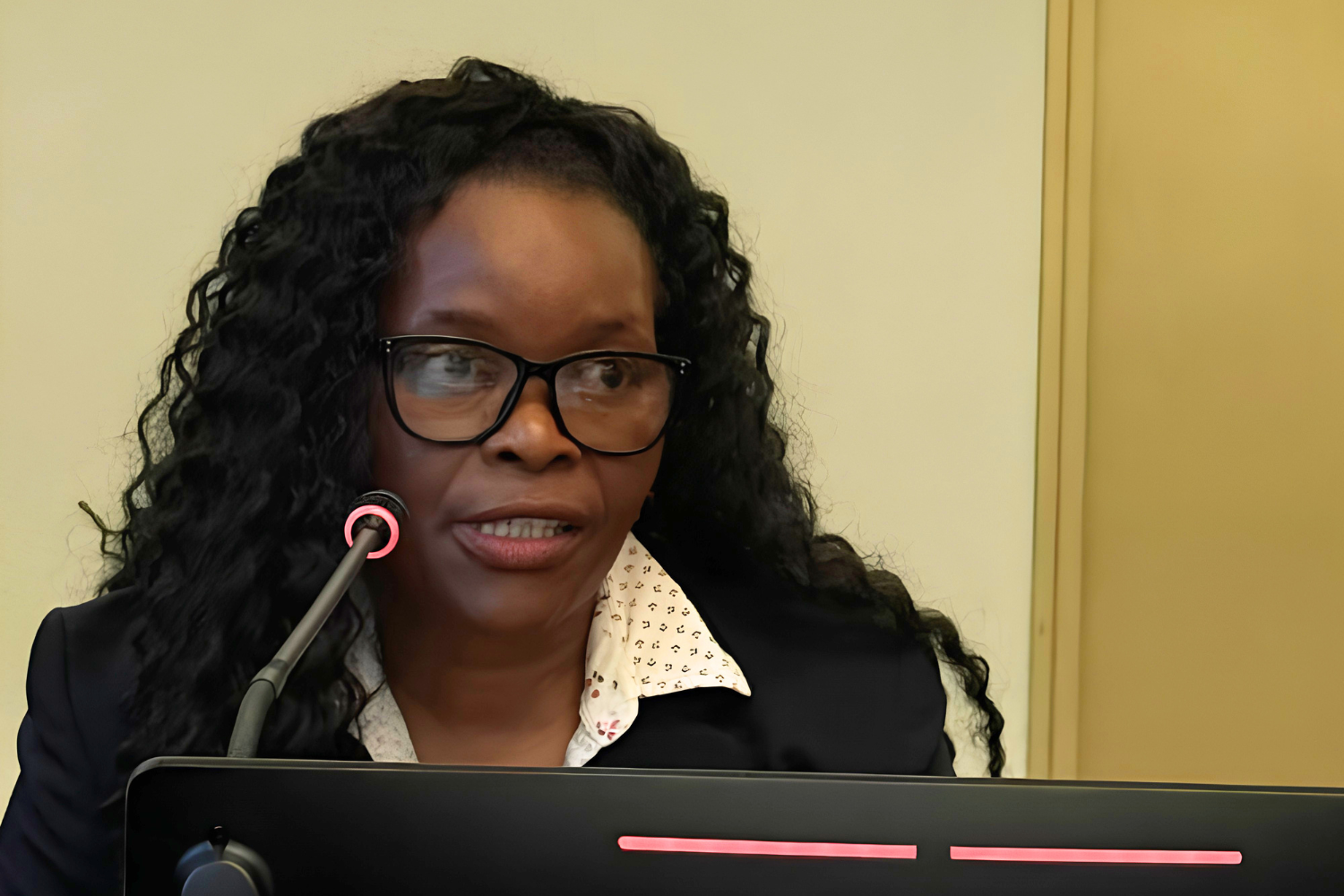
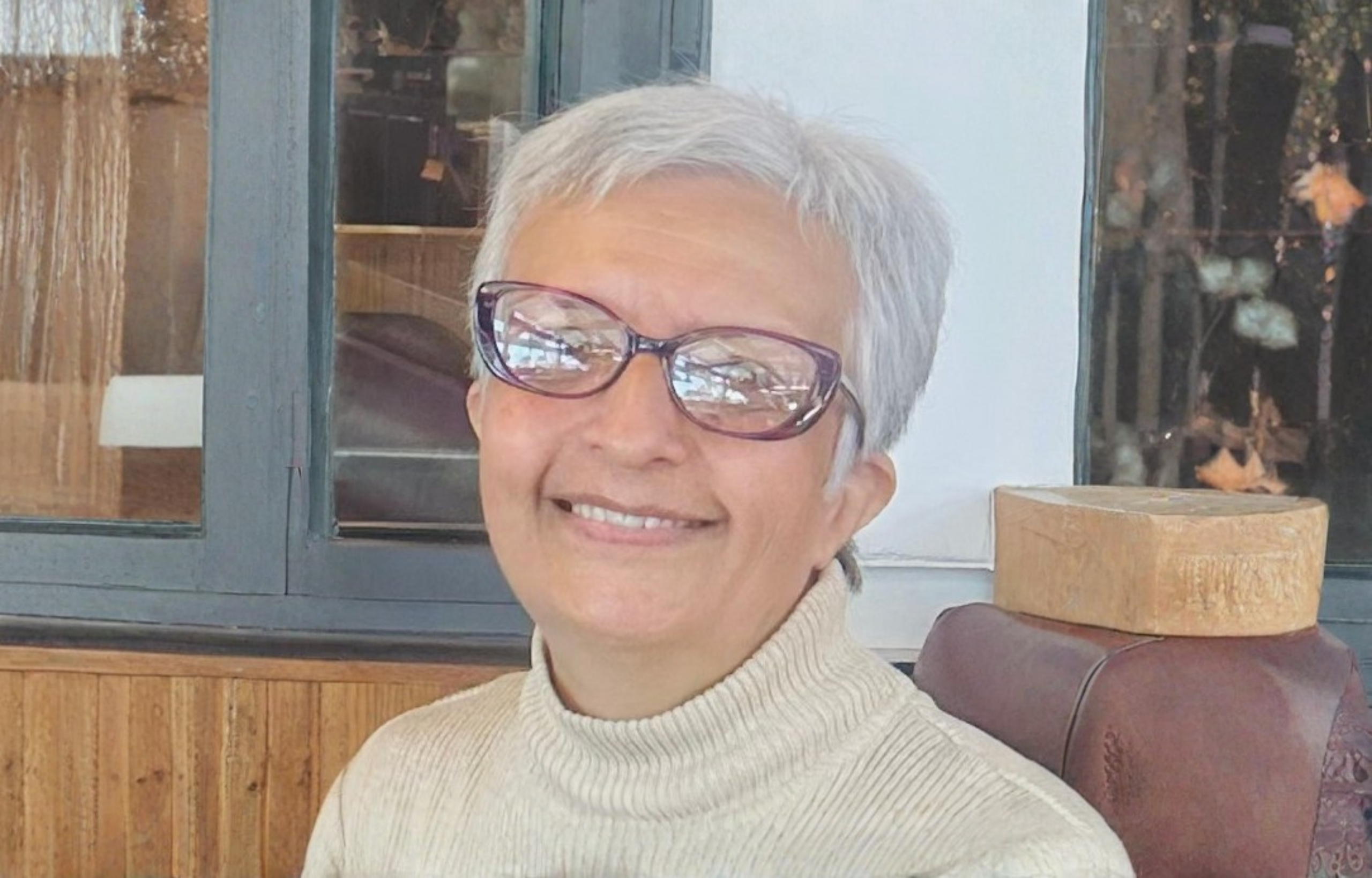
Judge Najla Ayoubi is a leading voice in advocating for including the persecution of women and girls in the Crimes against Human Rights Treaty. In 2024, she spoke at the United Nations on the systematic violation of women’s and girls’ rights and freedom in Afghanistan and the horrific restrictions placed on their lives. Judge Ayoubi was the first female judge in Afghanistan’s Parwan Province and played a key role in drafting the country’s constitution before threats on her life prompted her to flee the country. She is an International Criminal Law Expert and served as Every Woman’s Chief of Coalition and Global Programs from 2020 to 2024.
We spoke with Judge Ayoubi prior to her appearance at our CSW70 event on access to justice for survivors and the Crimes against Humanity Treaty on 17 March.
1. Why is an International Crimes against Humanity Treaty critical for strengthening access to justice for women and girls globally?
The Crimes against Humanity (CAH) Treaty is critical to closing a longstanding gap at the international level. It would create a comprehensive legal framework to criminalise, prevent, investigate and prosecute crimes against humanity, including those perpetrated against women and girls.
Women and girls are harshly affected by crimes against humanity, including sexual violence, sexual slavery, particularly in war zones, trafficking and forced marriage, as well as other forms of systematic abuse, including gender apartheid. Explicit recognition of the forms of violence perpetrated against women and girls would then require States to incorporate these crimes into their national legal systems, thereby criminalising these acts and ensuring they can be prosecuted under the law, providing a pathway to justice.
This is important because under the Rome Statute, crimes against humanity are recognised and prosecuted by the International Criminal Court. But it only targets a small number of people, the capacity to prosecute is limited, and many countries have not domesticated the Rome Statute, which means many survivors cannot seek justice in their own country. So the CAH treaty will create or expand access to justice at the national level for women and girls by ensuring that national courts are equipped to handle systematic crimes against women and girls, and institute a survivor-centred approach, which includes victim protection, witness support, and reparation.
2. Why is it essential that gender-based persecution, including the systemic oppression of women and girls, be explicitly codified in the CAH treaty?
Explicit language will clarify for States that gender-based crimes targeting women and girls are crimes that are redefined, reconized and prosecutable. Again, it’s about ensuring these crimes are included in national laws. When I worked as a legal advisor in Afghanistan in the President’s Administrative Office, it was my job to review new laws and make recommendations to be in compliance with international standards. If international standards recognise the persecution of women and girls, people in my position would have a tool, an international legal provision, to include in their country’s legal system.
I have two points to add:
One, recognising gender apartheid is essential to addressing patterns of persecution and oppression. We might know something is happening but don’t recognise it as a pattern, as institutionalised misogyny and systematic exclusion and oppression. Targeting a certain population, such as women and girls, because they are women and girls, is criminal, and it has to be coded as criminal law and punishable.
Two, recognising the systemic persecution and oppression of women and girls specifically would strengthen legal frameworks for prevention and State accountability. A treaty also gives survivors, human rights defenders, and human rights lawyers a clear, explicit tool to challenge the oppressive behaviour of a government or group.
3. How can civil society organisations meaningfully influence the CAH treaty negotiations?
Civil society is central to shaping international justice systems. First, civil society organisations document the crimes. For example, a group I work with has tracked the decrees that directly or indirectly restrict women’s and men’s rights in Afghanistan. They’ve documented 251 edicts and directives affecting all people and 161 that specifically limit women’s and girls’ rights and freedom. They also document the atrocities carried out in the name of these edicts, providing essential evidence of the on-the-ground reality for women and girls. In this way, civil society informs treaty negotiators on what is really happening. Negotiators can see the truth and the gap between international law and domestic law.
Second, civil society can advocate for the inclusion of gender oppression and persecution in the treaty. Civil society can push for the language that is needed. We are powerful enough to submit policy recommendations, and negotiators rely on us to do so.
Also, civil society amplifies the voices of survivors and victims. We mobilise public awareness to put political pressure on governments to support strong language and an inclusive treaty. Global coalitions have historically been crucial in advancing international justice initiatives, and we can and should continue to do that today.
Finally, once the treaty is in place, civil society plays a huge role in monitoring compliance and tracking implementation—it is part of how we shape and influence the international justice systems.
4. In the context of CSW70’s priority theme on access to justice, how can this moment be leveraged to advance stronger international accountability mechanisms?
We have an opportunity to strengthen the international architecture in responding to atrocities against women and girls. By advocating for explicit mention of women and girls and the crimes against them in the treaty, we strengthen the international framework for preventing and responding to atrocities against women and girls. We are ensuring that these crimes are explicitly recognised as crimes and addressed. In this way, we are making the international justice system more inclusive and more responsive to the realities on the ground for women and girls.
5. If the CAH treaty includes systemic gender persecution and oppression, what could that mean for women and girls and future generations worldwide?
I was just thinking last night that including gender-based systemic abuse in the CAH convention can have a profound and transformational impact for women and girls. It would establish clear legal standards, and once those standards are in place, the laws are there for future generations to use. If we didn’t have human rights standards and treaties, I would not be sitting here. I had access to education, access to movement, the ability to move and travel and leave when I needed to. I knew my rights, and this created a profound space for me. But this space was first created at the international level, and it opened doors for me. If women and girls in future generations know their rights, they can recognise what is happening to them as a crime. This is why we must establish clear legal standards at the international level, because it affects women’s and girls’ lives.
Specific mention of systemic gender persecution and oppression in the CAH treaty would also expand the avenue of accountability. The next generation will be able to hold their government accountable to this international standard. It gives women’s rights activists and civil society leaders a clear legal framework to challenge oppressive systems. If we create this now, we give future generations a tool for accountability.
When International law specifically defines a crime and is legally binding, it establishes a powerful space to shape global expectations of what is acceptable and not acceptable State behaviour, leading to long-term prevention.
Broadly speaking, explicit inclusion of women and girls in the CAH treaty will reinforce that gender equality is fundamental to justice and human dignity and that women and girls need and deserve equal access to justice.